Skip to content
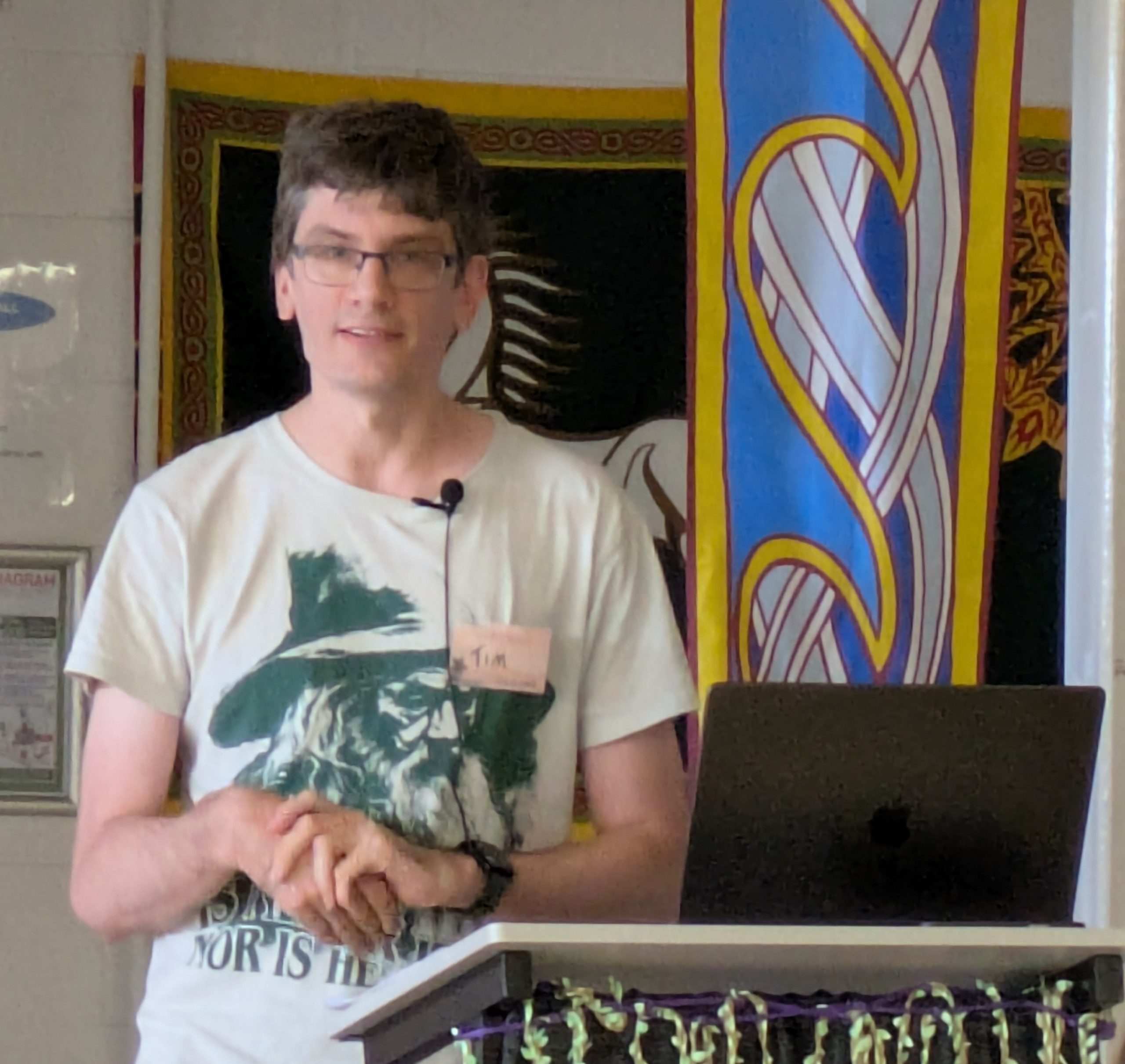
Celebrating Middle-Earth on the Table-Top: An exploration of the Middle-Earth Strategy Battle Game by Tim Wraight
- History of the game
- First Released in 2001
- Skirmish orientated
- Scenarios that called back to the Movies
- New releases as later moves released
- Very popular during the films and immediately after
- Good license from Middle Earth Enterprise so extra supplements that just covered book stuff
- More Releases as Hobbit movies came out
- 2018 revived the game and re-released and renamed to Middle Earth Strategy Game
- Various Releases since then
- How to Play the game
- Model, stuff in English
- Heroes or Worriers
- Heroes have special characteristics, special abilities etc
- Turn based, roll priority, move phase ( approx 6 inches), shoot, fight phase, end phase
- Games take between 1 hour and 1 day
- How Tolkien and Imagination is Celebrated in the game
- Narrative Scenarios reflects special moments from the books/films
- Can do what-ifs like build your own “fantasy fellowship” instead of cannon 9
- Most people play the Match play variant. 2 players each build an army worth same number of points. Takes about 2 hours
- Lots of special rules for each Hero Character
- People can do backgrounds for their army, special color schemes etc. Models from other vendors or 3d printed
- People like making their own terrain.
- Also they have display boards to display armies
- 80 play tournaments in Aus, 160 player+ tournaments in UK
A Comparison of Duels: Tolkien’s Legendarium and the Middle Ages to Early Modern Period by Karolina Firman
- Does the Legendarium actually have any duels?
- Definition of a Duel
- A pre-planned and stylized one-on-one armed fight between two participants in defense of your own or a loved ones honour
- Other motivations
- Legitimizing your own masculinity
- Fights to prove your innocence
- Demonstrating fencing skills
- Possible Duels in LOTR
- Gandalf vs Balrog
- Eowyn vs the Witch King
- Samwise fighting Shelob
- Aragon vs Lurtz (movie only)
- Boromir vs unnamed Orcs (book)
- The ones that is closest to traditional definition is Eowyn vs Witch King and Sam vs Shelob.
- Gandalf vs Balrog has less honour component
- Aragon vs Lurtz
- In speakers opinion none of them really qualify
- Big discussion on what qualifies and what doesn’t
Finrod Felagund and Severus Snape as Saviour Heroes in the Context of Universal Plot Structures by Evelina Timofeeva
- Both Characters are in love with a character that is far away
- Both have vast life experience
- Both perform heroic deeds because of a past performance
- Both are distrusted by those around them
- Both die for an apparently lessor character
- Both a slain by magical creatures
- I was having trouble keeping up